THE WINDS OF ARIZONA
ESTATE & VINTAGE — TALES FROM THE WINE WORLD
As winter approaches with its usual Scottish insistence upon grey skies, damp pavements and the occasional suggestion that the sun has emigrated permanently, the New World begins to beckon. Not literally, of course. I have neither the means nor, on most mornings, the inclination to leap upon a horse and ride westward in search of adventure. But in the mind’s eye, which is considerably cheaper and rarely requires a passport, exotic wine-growing regions have a habit of appearing at precisely the moment one needs them.
Western Australia, where the Pacific and Indian Oceans conduct their great maritime conversation. Franschhoek, dignified beneath the mountains of South Africa. Places where the light seems brighter, the landscapes more improbable and the grapes, one imagines, somewhat more adventurous than their European cousins.
Then, one evening, I found myself reading Stevie Nicks’ biography. This was not, on the face of it, a particularly obvious route into the wine world. I had always thought of Stevie Nicks as the quintessential Californian girl: mysterious, ethereal, permanently surrounded by chiffon, moonlight and an unspecified quantity of Fleetwood Mac. Yet there I discovered that she was, in fact, born in Phoenix, Arizona.
Arizona. I stopped. Arizona?
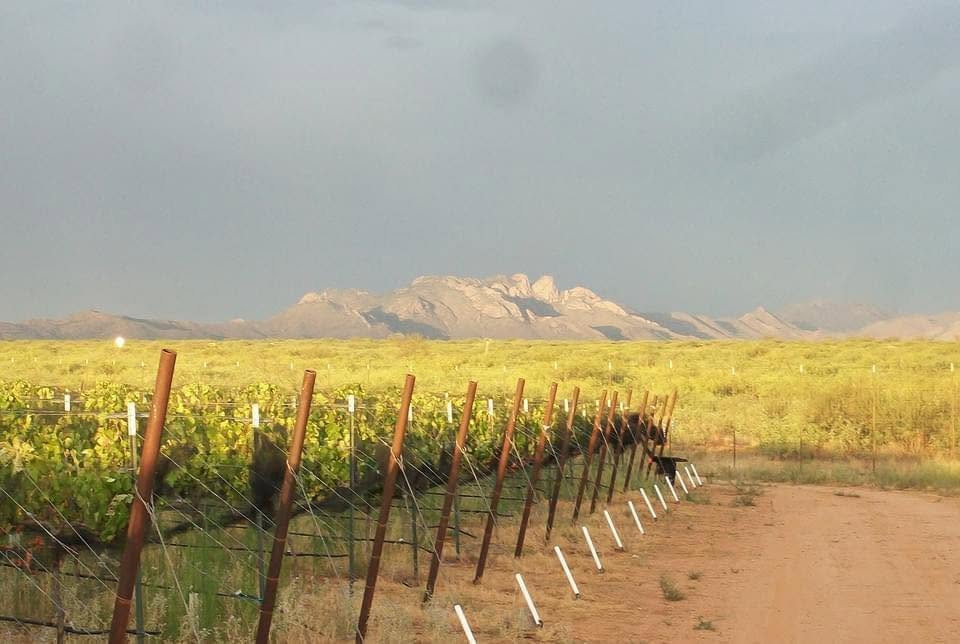
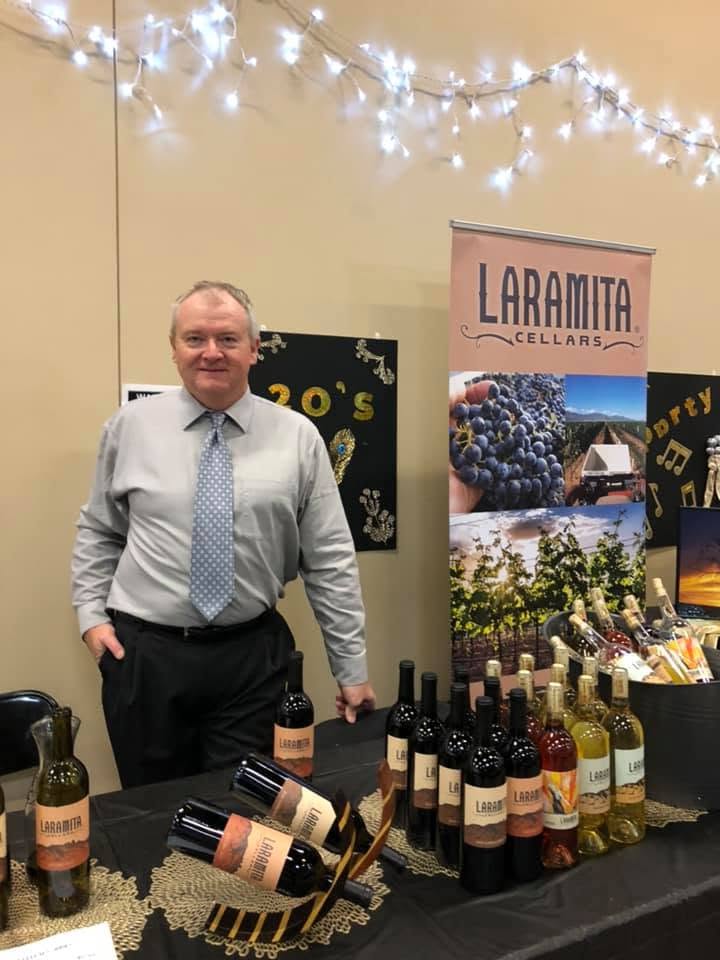
My knowledge of the place was considerably more associated with deserts, cacti and men wearing large hats than vineyards. Yet vineyards there are. Indeed, the more I looked, the more interesting the proposition became. So, by virtue of the two words which have transformed human communication into something simultaneously miraculous and mildly exhausting — social media — I found myself making contact with a winemaker in southeastern Arizona. His name is Greg Gonnerman, owner and winemaker of Laramita Cellars, nestled among the foothills of the Dos Cabezas Mountains in the Willcox AVA.
And so the expedition began.
THE DESERT THAT ISN’T QUITE A DESERT
The first thing one learns about Arizona wine is that appearances can be deceptive.
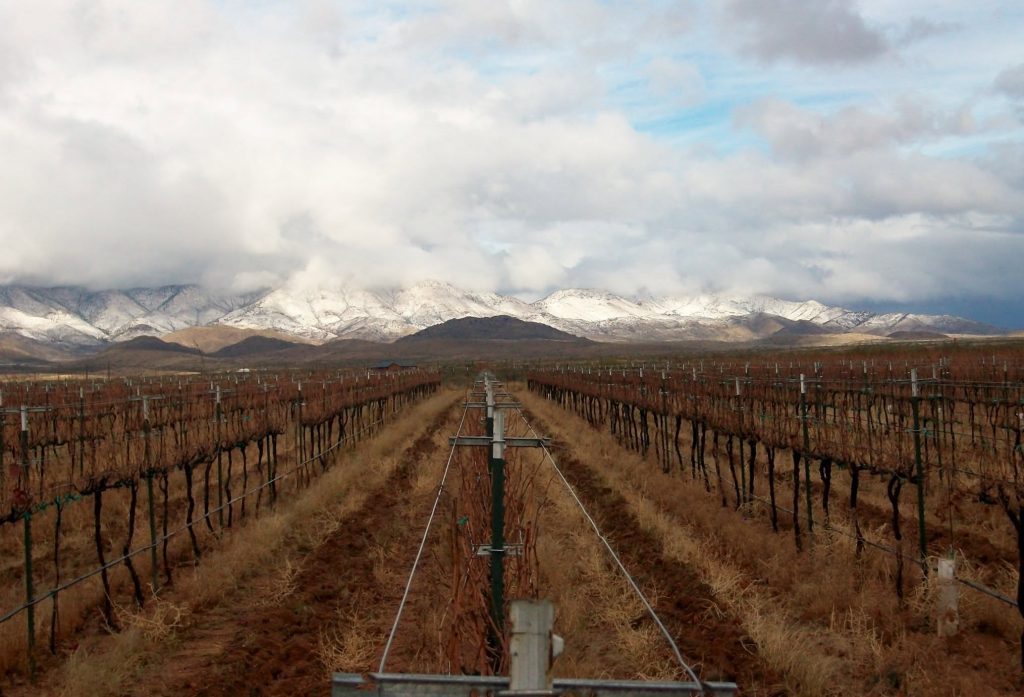
The Willcox region sits at roughly 4,000 feet above sea level, with vineyards in the wider Arizona wine country extending into considerably higher elevations. The heat of the desert is therefore only half the story. Elevation brings cooler conditions, and the diurnal temperature swings can be considerable.
Laramita’s own vineyard, at Chiricahua Ranch Vineyards, sits in the foothills of the Dos Cabezas Mountains. Greg grows a remarkably broad collection of varieties — eighteen, according to the winery — and makes wines from 100% Arizona-grown grapes. His approach combines Old World winemaking traditions with modern techniques, while the vineyard follows sustainability principles and incorporates organic approaches throughout its viticulture. It is, in other words, not quite the Arizona I had imagined. The cactus, I suspect, would be disappointed. Greg’s route into wine is equally unlikely.
He began with backyard vines and home winemaking, planting wherever he could persuade friends to surrender a little garden space. In 2012, a visit to Brazil provided the final nudge. People who tasted his wines asked the obvious question: why wasn’t he doing this commercially? He had all the usual answers. Too much work. Too much risk. Too much bureaucracy. All perfectly respectable reasons, of course. Unfortunately, they failed to convince him. By 2013, Laramita Cellars had begun to take shape. There are moments in life when one discovers that the sensible answer is not necessarily the answer one can live with. This appears to have been one of them.
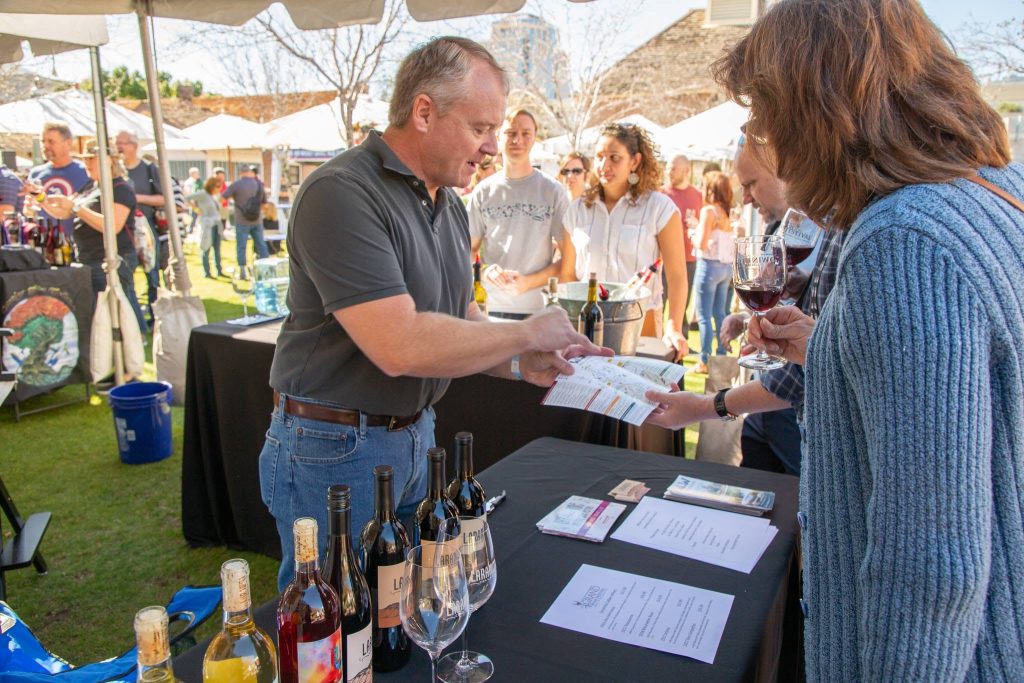
I FIRE MY FIRST CANNON
I had questions. Questions, as I have long maintained, are rather like doors. One asks one and suddenly finds oneself standing somewhere one had not expected to be. So I fired my first cannon.
“What is the most misunderstood thing about making wine in Arizona?”
Greg’s answer was wonderfully straightforward.
People associate Arizona with extreme heat and dry deserts, he explained. What surprises them is that wine can indeed be produced there. The secret? Elevation. At the right altitude, the conditions can be remarkably well suited to wine grapes. This seemed to me a useful reminder that wine has always been rather good at ignoring assumptions. Burgundy does not ask permission to be Burgundy. Neither, apparently, does Arizona.
THE GRAPES HAVE THEIR SAY
I asked Greg about varieties. Here matters became rather more interesting. Italian varieties, he says, seem particularly happy in Arizona. But every variety teaches him something. Pinot Noir, that notoriously temperamental grape which has acquired the melodramatic nickname of “the heartbreak grape”, behaves rather differently under his conditions. Crop-forcing techniques combined with the dry, cool autumn weather can make it surprisingly manageable.
Other varieties retain their acidity beautifully. Others do not. Some ferment obediently. Others, apparently, develop opinions of their own. This is one of the things I like about wine. You may begin with a plan. The vineyard will then politely inform you that you have misunderstood the arrangement.
FROM BACKYARD TO BOTTLE
I wanted to know when the hobby stopped being a hobby. The answer came back to that trip to Brazil. Greg had taken a few bottles of his homemade wine with him. People tasted them. Then came the question. Why aren’t you doing this as a business? He offered the standard objections. Too much work. Too much risk. Too much bureaucracy. And yet, on returning home, he began looking for the property that would become his vineyard. It is tempting to imagine that great wine businesses begin with grand plans. Sometimes they begin with someone being asked the same question often enough that eventually they become tired of giving the wrong answer.
WHAT IS IN A NAME?
Even the name has a story.
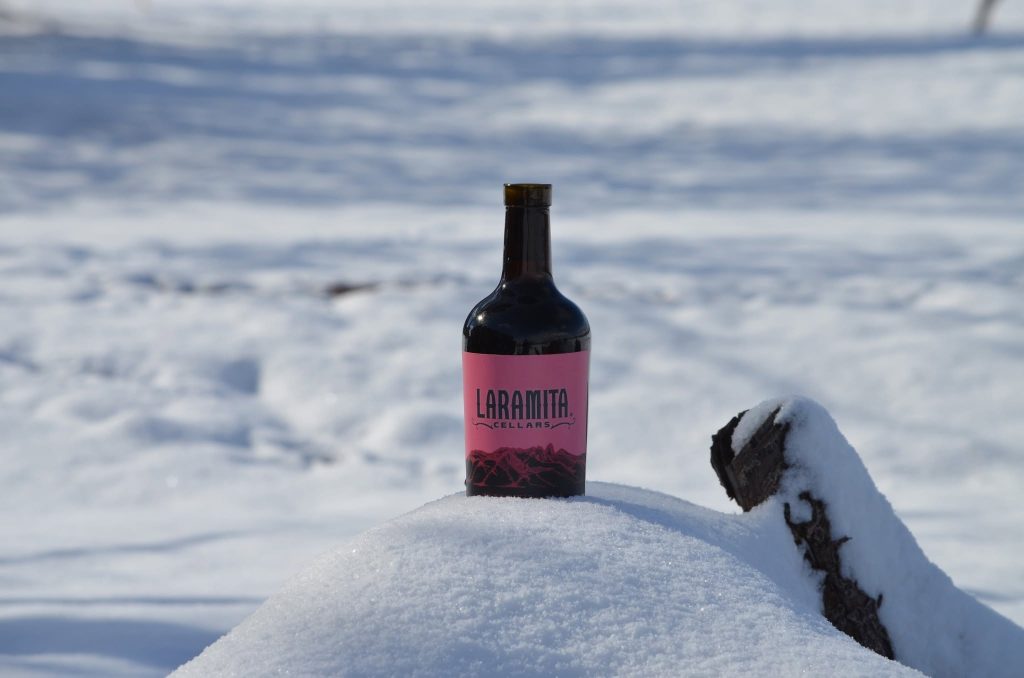
Laramita comes from the name of a historic settlement that was once an early port of entry from Mexico into Arizona. The winery explains that “La Ramita” means “the twig” in Spanish, while Laramita was also the name associated with that former Arizona settlement. Greg eventually chose the name after researching the history of the region. There is something satisfying about this. A winery rooted in a particular piece of Arizona carries a name rooted in the history of the place itself. Wine, after all, is forever borrowing from geography. Sometimes it borrows from history as well.]
THE QUESTION OF THE BOTTLE
Then I asked a more dangerous question.
“If I took away the bottle, the label, the medals and the tasting notes, what would you want someone to remember about Laramita?”
Greg’s answer was disarmingly modest. That they had made some great wines. And that they had brought a little joy into people’s lives. It is difficult to argue with that. The wine world occasionally has a habit of making itself sound as though the future of civilisation depends upon whether a wine possesses sufficient minerality, the correct degree of phenolic tension or a finish which lasts longer than the average parliamentary speech. But underneath all of it lies something rather simpler. Someone opens a bottle. Someone pours it. People sit together. And, if things have gone well, they are happier than they were before.
THE VINEYARD HAS A COMPLAINT
I could not resist one final question.
“If your vineyard could complain about you, what would it complain about?”
The answer made me smile. That he is not there enough. Other business obligations keep him occupied. But Greg believes there is nothing better for a vineyard than the footsteps of its owner. There is something rather lovely about this. A vineyard is not merely a collection of vines. It notices things. The weather. The seasons. The people who tend it. And, perhaps, whether the person who planted it has bothered to come and say hello.
WHY DO WE MAKE WINE?
By now I had arrived at the sort of question which tends to appear when one has been thinking about wine for too long.
So I asked:
“If an alien landed in your vineyard tomorrow and asked you to explain, in one minute, why humans bother turning grapes into wine, what would you tell it?”
Greg’s answer was simple.
Wine brings happiness to people in many ways. It is not merely an inebriant. It goes with food. It creates social occasions. It brings people together. I suspect the alien would have found this perfectly adequate. Indeed, after several thousand years of human history, wars, empires, inventions, revolutions and the invention of social media, perhaps it is not such a bad explanation. We make wine because we like being together.
THE ROAD WEST
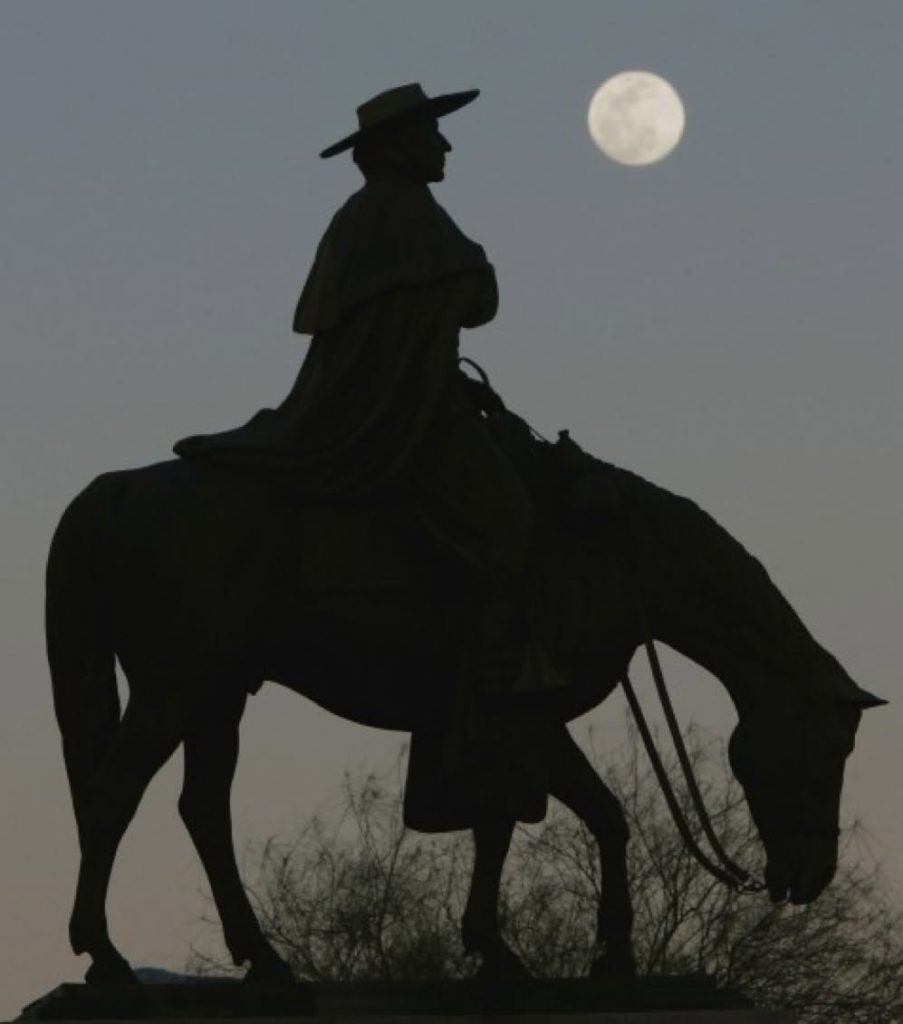
And so Arizona has entered my mental map. Not merely as the place where Stevie Nicks was born, although that alone would probably be enough for some readers. But as a wine country of elevation, experimentation and extraordinary contrasts. A place where the landscape says desert while the vineyard says something rather different. Where Italian varieties can flourish beneath an Arizona sky. Where a backyard hobby can become a commercial winery. And where a winemaker can still believe that the best thing a vineyard can have is the footsteps of its owner. Perhaps that is what I was looking for when I began this little expedition. Not another exotic wine region to add to the list. Not another bottle with a clever label.
But evidence that wine continues to appear in unexpected places, usually because someone was sufficiently curious — or sufficiently unreasonable — to try. And perhaps that is why, as winter closes around Scotland and the New World once again begins to shimmer somewhere beyond the Atlantic, I find myself thinking of Arizona. Don Quixote set out upon the roads of La Mancha in search of giants, castles and adventures which were, at least occasionally, rather more complicated than they appeared. I have no horse I have no lance. And I have considerably less confidence in my ability to distinguish a giant from a windmill. But I do have a corkscrew. And somewhere beneath the mountains of southeastern Arizona, Greg Gonnerman has a vineyard.
That, for the moment, will do. After all, every expedition needs a destination. And every good bottle needs a reason to be opened.
Aitken Pearson.