Where One Golden Grape Takes Five Remarkable Journeys
One grape. Five expressions. Millions of years beneath the vines.
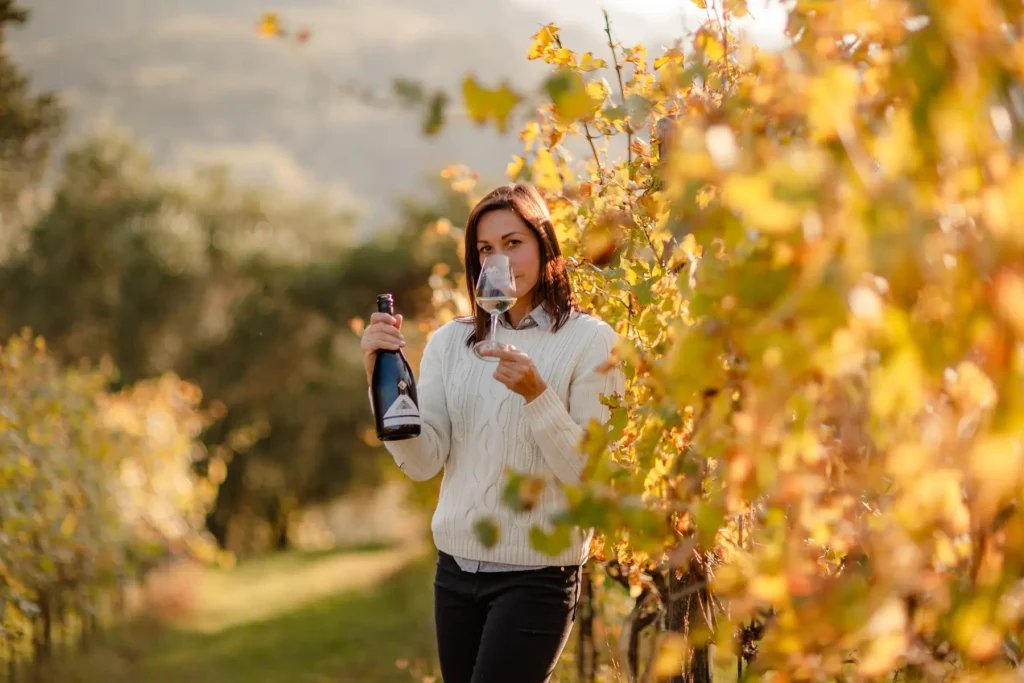
In the latter days of August, when the vineyards around Maeli were in full conspiracy with the sun and the harvest had begun its great annual taking of the grapes, I ventured into the Euganean Hills to seek out Elisa Dilavanzo, the bold winemaker behind Maeli Wines. Expecting, as one might reasonably expect at such a season, to find her vanishing beneath the burden of baskets, tractors, telephones and the thousand urgent demands that accompany the gathering of a vintage.
Yet, despite the tumult of harvest, she found the time to stage for me a tasting of all five of her Yellow Muscats, as though the business of picking grapes could, for a brief while, be suspended in favour of a more curious expedition into the nature of the grape itself. One after another the wines appeared, each seemingly determined to contradict the last, until the conversation itself began to wander beyond the well-trodden vocabulary of wine and into stranger territories, which was precisely where I hoped it might go. For instead of surrendering to those predictable adjectives which have become the weary currency of wine conversation — tension, generosity, elegance, complexity, and all the other respectable words that can be summoned to describe almost anything poured into a glass — Elisa began speaking of the Dark Side of the Moon, of Jekyll and Hyde, and of wine as something possessing contrary natures, hidden chambers and personalities that refused to sit obediently upon the tasting sheet.
At that moment the five wines ceased to be merely five interpretations of Yellow Muscat and became, in my imagination, five characters entering the same stage by different doors: one sweet, another wild, another austere, another seemingly composed yet harbouring some deeper mineral mischief, each carrying within it a different answer to the same question. And I confess that I found this infinitely more intoxicating than any procession of approved tasting notes, for here was a winemaker speaking not merely of what the wine was, but of what it might become in the mind of the drinker.
Thus, while the harvest raged beyond us and the vines surrendered their precious fruit to the hands of those who would turn it into another vintage, I found myself drawn into a rather different harvest altogether — the gathering of ideas, images, contradictions and stories — and I left Maeli with the distinct impression that Yellow Muscat, like certain wandering knights and troublesome gentlemen of literature, is most interesting when it refuses to behave according to expectation.
The Yellow Muscat Road.
– There is something wonderfully evocative about La Via del Moscato Giallo – the Yellow Muscat Road. Its name seems to invite a little imagination, conjuring the faintest echo of another famous
yellow road, winding through a world where the ordinary can suddenly become enchanted. But this road leads not to the Emerald City. It winds through the volcanic hills of the Euganean
landscape, where the golden Moscato Giallo has found its home. And like all good roads in stories, it is less about the destination than about what might be discovered along the way.
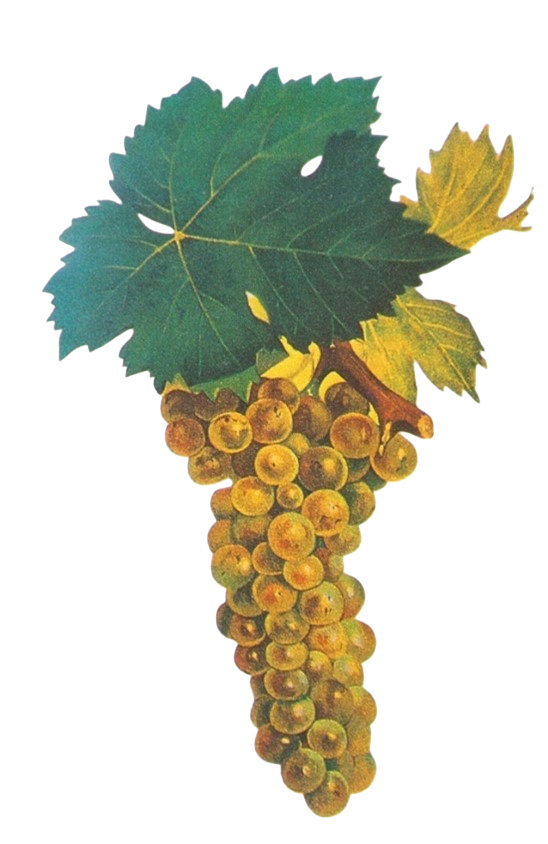
ONE GRAPE / FIVE STYLES OF WINE
01
Fior d’Arancio / Sweet Sparkling
Maeli’s signature expression of Yellow Muscat, a sweet sparkling wine filled with white flowers, peach, aromatic herbs and almond. Its generosity of sweetness gives way to an elegant mineral and saline finish, making it far more versatile than a conventional dessert wine.
02
Dilì — Ancestral Method.
Dilì is a lightly sparkling Yellow Muscat, bottled with its own yeasts and undergoing a second fermentation in the bottle according to the ancient ancestral method. Fresh, generous and convivial, it combines citrus notes of citron, grapefruit and bergamot with a gently bitter, saline finish.
03
Dilà — Classic Method Brut Nature.
Dilà takes Yellow Muscat into a more serious and contemporary realm, crafted as a classic-method Brut Nature sparkling wine. With no dosage, it reveals the grape through a drier, more structured expression, showing how remarkably far this aromatic variety can travel.
04
Bianco Infinito — Dry Still.
Bianco Infinito is Yellow Muscat stripped of sweetness and presented as a complex, dry still wine, with yellow flowers, aromatic herbs and balsamic notes developing through extended bottle ageing. Mineral, savoury and persistent, it expresses the character of the Euganean Hills with a remarkable sense of place..
05
Diloro — Passito.
Diloro is the intensely concentrated expression of Yellow Muscat, made as a passito from Fior d’Arancio grapes, where sweetness meets a striking saline character. Apricot, candied peach, dried orange, sweet almond and fig give way to a savoury, salty finish that recalls the distinctive mineral character of the Euganean landscape.
‘SHARKS TEETH AND VOLCANO IN A
GLASS’
Beneath the Surface.
It was when Elisa began talking about the land that the story became even more intriguing. The vineyards are rooted in volcanic soils, but the geological story goes much further back. Millions of years ago, this landscape was covered by the sea.
The thought changes the way you approach the wine.
The vineyard is no longer simply a place where grapes happen to grow. It becomes part of a geological story that began long before anyone was making wine here.
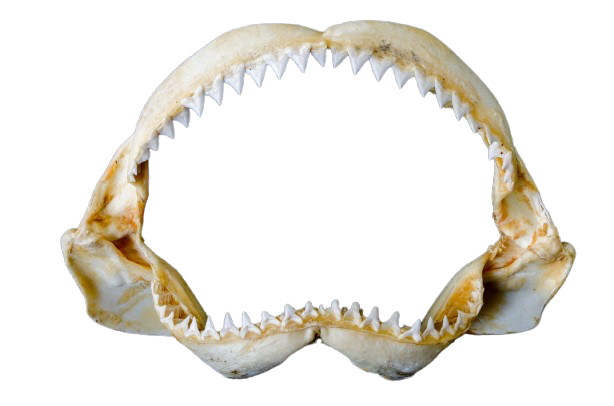
Elisa spoke about the volcanic character of the soils and the remnants of that ancient marine environment that can still be Found in the land – including fossils such as shark teeth.
Suddenly, the idea of terroir becomes wonderfully tangible.
You are tasting something that comes from a place

Wild Boars.
Perhaps what I enjoyed most about meeting Elisa was that her story wasn’t romanticised. Making wine isn’t simply about vineyards, beautiful landscapes and
bottles on a table. There are problems.
When I asked Elisa about the challenges she faces, one of the answers was wonderfully unexpected: Wild boars. They eat the fruit. They break into the vineyard. And they create problems that have absolutely nothing to do with the
romance of wine.
.
Why the encounter was memorable.
What remained with me, after I had taken my leave of Maeli and gone my way, was not so much the astonishing circumstance that the Yellow Muscat, a grape which one might reasonably have supposed condemned by nature to a single manner of expression, could nevertheless give birth to five wines so different from one another, as the tale that stood behind them; for, as Elisa had spoken, I began to suspect that wine, like men and perhaps even like knights-errant, is very rarely understood by judging only the face it presents to the world.
.
Until that conversation, I had been accustomed to speak of wine as other men speak of maps: by its fruits, its acidity, its texture, its minerality, and all those other qualities by which we persuade ourselves that we have properly accounted for what lies before us in the glass. Yet Elisa’s words left me wondering whether we had not overlooked the more curious matter altogether: that every wine carries within it another story, invisible but no less real, and that sometimes the history of a bottle may prove far more captivating than anything the tongue itself can discover.